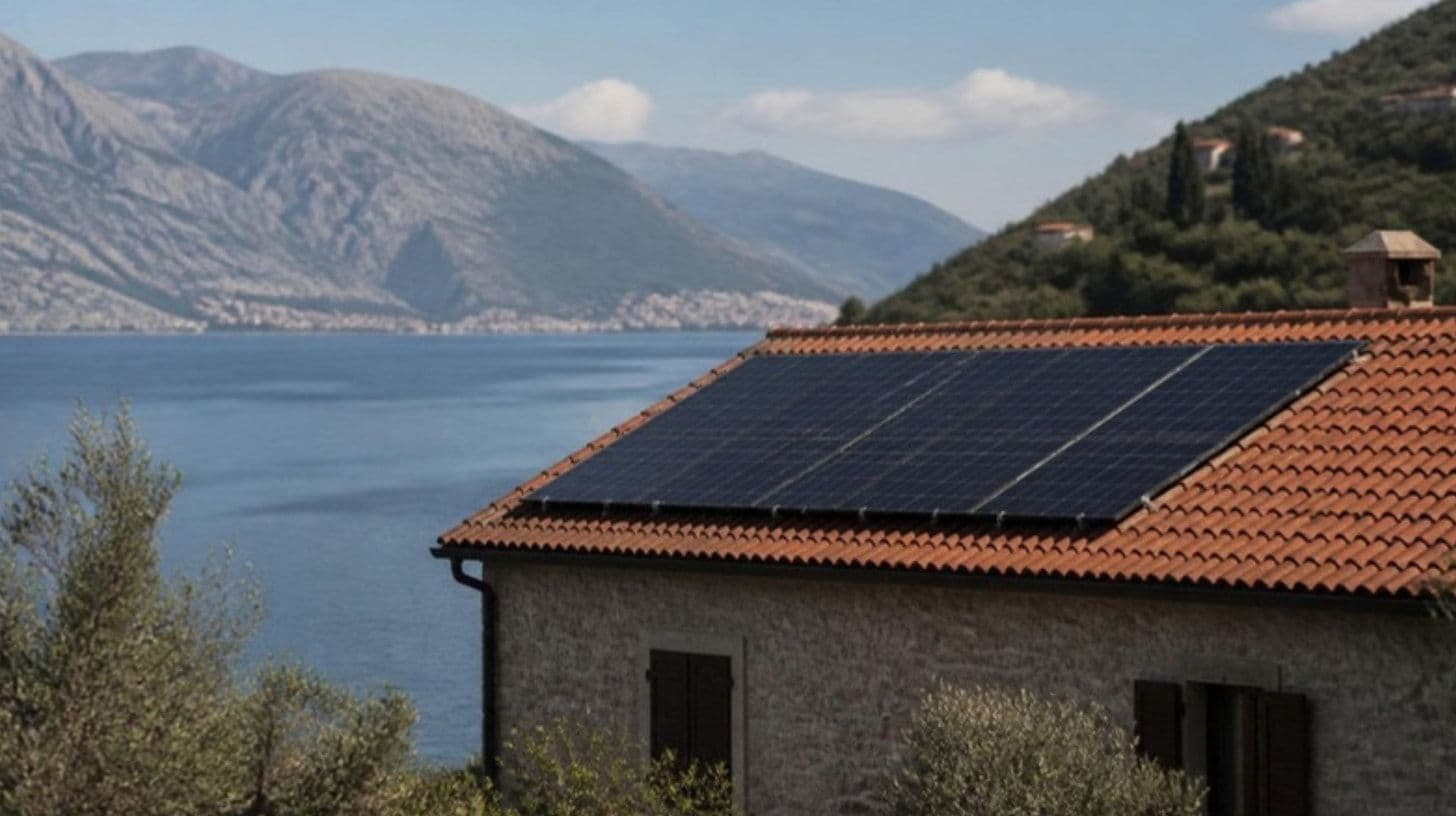
You can connect a solar plant on the roof of a house in Montenegro as a prosumer: you generate electricity for your own use and feed the surplus into the grid. Plants up to 16 kW qualify for the simplified connection procedure with CEDIS, on which CEDIS must decide within 30 days, and for net metering: surplus is carried forward as an energy deposit, and on 1 April the supplier settles it for the previous 12 months and pays at the energy price in your contract. The plant's power must not exceed the connection power of the building.
The rules come from the 2024 Law on the Use of Energy from Renewable Sources and the CEDIS procedure. This guide explains who can be a prosumer, which settlement applies to which power, how the connection works and what happens to surplus electricity.
Who can be a prosumer?
A prosumer is an end customer who generates electricity from renewable sources on their own premises for their own use and who can store or sell the surplus. For a customer that is not a household, this must not be its main commercial or professional activity.
- Power. The installed power of the plant must not exceed the connection power of the building.
- Status. You become a prosumer when you connect the plant to the building's internal installations and settle contracts with CEDIS and the supplier.
- Installations. The installations in which you generate or store electricity count as your internal installations.
If the building is not yet connected to the grid, the connection comes first, as described in our guide to getting electricity connected to a new house.
Which settlement applies to which power?
| Installed power of the plant | Settlement method |
| Up to 16 kW | Net metering: surplus is carried forward as an energy deposit in kWh |
| From 16 to 50 kW | Net billing: the value of the surplus is carried forward as a financial deposit |
| Over 50 kW | Commercial scheme: electricity taken and delivered is settled separately |
| Over 300 kW | You also report a daily schedule of delivered energy and bear imbalance costs |
The supplier that supplies you must buy the surplus at the energy price in your contract and offer you a contract with one of these settlement methods. Settlement between you and the supplier is annual, ending on 1 April for the previous 12 months.
How does net metering up to 16 kW work?
Each month the supplier adds up the electricity you delivered to the grid and the energy deposit from earlier months and subtracts the electricity you took from the grid.
- If the result is positive, the difference is carried into the next month as an energy deposit, and the bill is calculated as if you had no consumption that month.
- If the result is negative, that amount is the basis for the energy charge on the bill.
- On 1 April the supplier makes the final settlement for the previous 12 months. It settles the remaining surplus at the energy price in your contract, without network and other charges, uses it first to clear your outstanding debts, and pays you the rest within 30 days of the settlement.
Under net metering, the fee for promoting renewable generation is calculated on that monthly basis.
A net metering example
| Month | Taken from the grid | Delivered to the grid | Result |
| June | 300 kWh | 400 kWh | A deposit of 100 kWh; energy for June is not charged |
| November | 350 kWh | 150 kWh | Delivered plus deposit (150 + 100) fall short of what was taken by 100 kWh, so 100 kWh are charged |
The example shows only how the settlement works; real quantities depend on the plant, the roof and your consumption.
How does net billing from 16 to 50 kW work?
Under net billing, money rather than energy is carried forward. If in a month you took more than you delivered, you pay the difference at the contract price. If you delivered more, the value of the surplus passes into the next month as a financial deposit, calculated at the contract energy price reduced by 5%, and is used in months when you take more than you generate.
How does the simplified CEDIS procedure work?
- Request. You file a request for technical conditions for connecting the plant, on the CEDIS form, with a certified single-line connection diagram of the plant and a cadastre extract no older than one month. If the request is incomplete, you have 3 days to complete it.
- Technical conditions. If there is available capacity in the grid, CEDIS issues technical conditions: the connection point and method, the metering point and the protective devices. If there is no capacity, the request is rejected within 30 days at most.
- Notice of fulfilled conditions. When the plant is finished, you submit a notice with a report by an authorised organisation on the installations, a statement by the licensed contractor, the contractor's licences, the construction notice filed with the municipal utility inspector and the equipment certificates.
- Inspection and meter. CEDIS reviews the documents, carries out an internal technical inspection and installs a control meter.
- Contract. CEDIS signs the prosumer connection contract and issues a notice that you can sign an electricity sale contract with your chosen supplier.
CEDIS must complete all these steps within 30 days at most. At the handover point a billing meter measures electricity taken and delivered separately, and the control meter records total production. You must give authorised persons access to the meters and installations. How to obtain the cadastre extract filed with the request is explained in our article on the cadastre extract. Electricians and contractors can also be found through the Glatko platform.
What if you live in a flat?
The roof of a residential building is usually a common part of the building, so before installing panels on it check the building's rules and the decisions of the owners' assembly. Since the 2026 amendments, prosumers acting jointly are entitled to a reduction in the distribution network charge, in proportion to their lower use of the grid, under a methodology set by the regulator. When an energy performance certificate is needed to sell or let a flat is explained in our article on the energy performance certificate.
Checklist
| Check | Why |
| The building's connection power | The plant must not be more powerful |
| Plant power up to 16 kW | It qualifies for the simplified procedure and net metering |
| Cadastre extract no older than one month | It is filed with the request |
| Licensed contractor and equipment certificates | They are required with the notice of fulfilled conditions |
| Contract with the supplier | It sets the price at which surplus is settled |
Frequently asked questions
Do I need a permit for solar panels on my house? For plants up to 16 kW CEDIS runs a simplified connection procedure, and with the notice of fulfilled conditions it also requires the construction notice filed with the municipal utility inspector.
How powerful a plant may I install? The installed power must not exceed the building's connection power. The simplified procedure and net metering apply to plants up to 16 kW.
What happens to surplus electricity? Under net metering, surplus is carried forward as an energy deposit into the following months, and on 1 April the supplier pays for the remaining surplus of the previous 12 months at the energy price in your contract.
How long does connecting a solar plant take? CEDIS must complete the simplified procedure within 30 days at most of the request being filed.
Which documents does the request need? The request on the CEDIS form, a certified single-line connection diagram of the plant and a cadastre extract no older than one month.
How is a 20 kW plant settled? Plants from 16 to 50 kW use net billing: surplus is carried forward as a financial deposit, calculated at the contract price reduced by 5%.
Sources
Prosumers are governed by the Law on the Use of Energy from Renewable Sources (Official Gazette of Montenegro 82/2024 and 119/2026, articles 62 to 70; the 2026 amendments do not change these articles and introduce the reduction for joint action in article 75), and the simplified procedure by the CEDIS Procedure on the simplified connection of prosumers (adopted on 25 September 2025). The rules were checked on 24 September 2026. Fijaka is a classifieds platform and does not provide legal or technical advice; for a specific plant, contact CEDIS, your supplier or a licensed contractor.