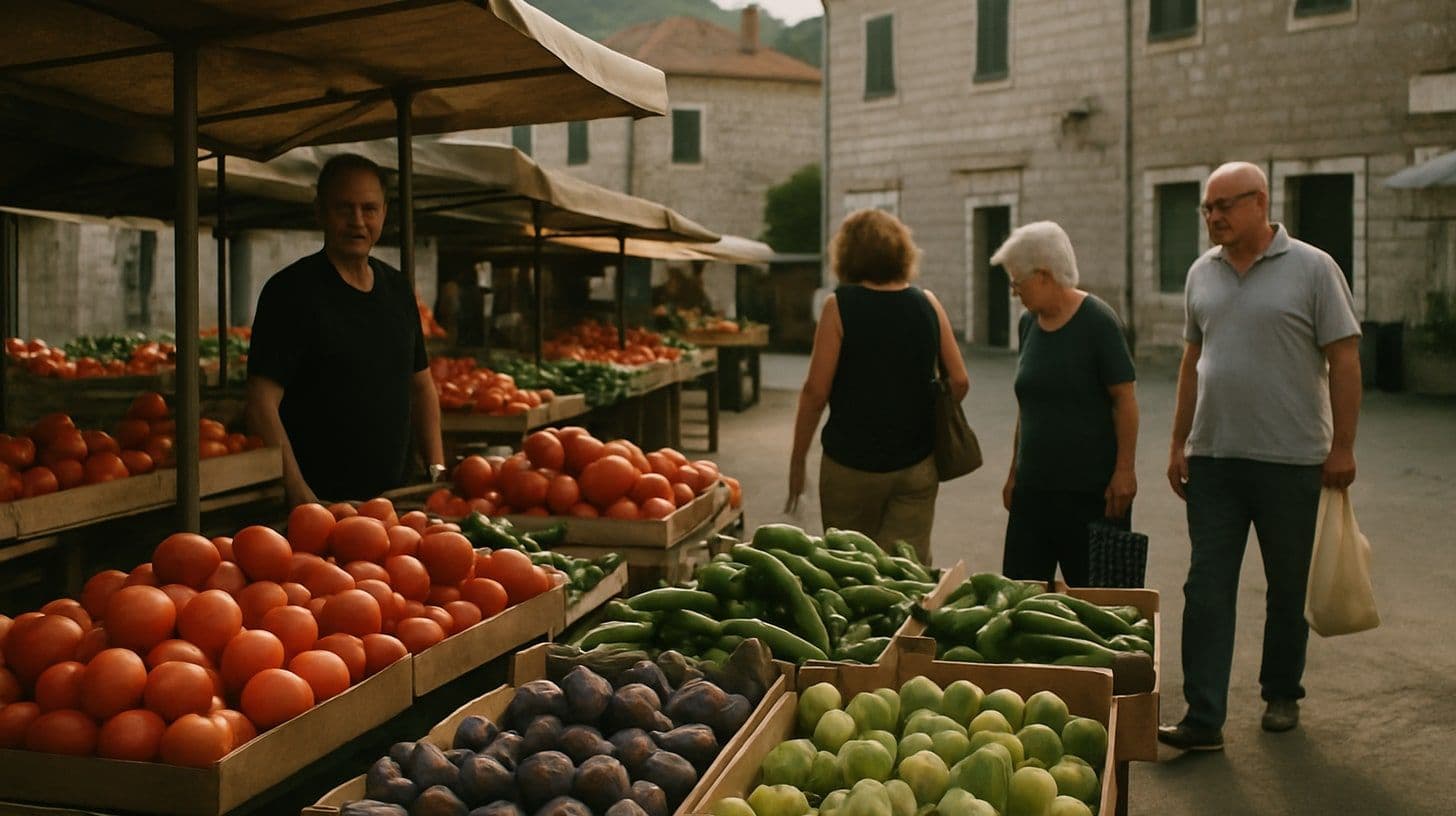
For someone living in Germany and thinking about moving to Montenegro, the real question is what everyday life costs there compared with Germany: what is cheaper, and what is not. Most answers are shopping lists from a holiday. A sturdier source is the one statistics offices use themselves: Eurostat's price level indices, which compare what the same basket costs in each country, with the EU average set at 100.
The short version: Montenegro's overall price level was 66% of the EU average in 2025. Germany stood at 109 in 2024. But that single number hides the important part: some things cost less than half in Montenegro, others almost as much as in Germany.
Montenegro and Germany, category by category
The detailed breakdown is published for 2024. EU average = 100:
| Category | Montenegro | Germany | Montenegro compared with Germany |
| Household consumption, total | 63 | 109 | about 42% cheaper |
| Food and non-alcoholic drinks | 84 | 103 | about 18% cheaper |
| Alcoholic drinks | 123 | 87 | about 41% more expensive |
| Tobacco | 43 | 118 | about 63% cheaper |
| Clothing | 95 | 101 | about 7% cheaper |
| Footwear | 104 | 100 | about the same |
| Electricity, gas, fuels | 46 | 122 | about 63% cheaper |
| Health | 40 | 112 | about 64% cheaper |
| Transport services | 72 | 119 | about 39% cheaper |
| Communication | 102 | 136 | about 25% cheaper |
| Restaurants and hotels | 66 | 112 | about 42% cheaper |
| Consumer goods, total | 79 | 106 | about 25% cheaper |
| Services, total | 50 | 112 | about 55% cheaper |
Source: Eurostat price level indices, rounded; the percentages are our calculation from the indices. The 2025 overall figure (66) was published by Montenegro's statistics office MONSTAT.
What the table means
Labour is cheap, goods are not. Services cost less than half the German level in Montenegro; consumer goods only a quarter less. Someone coming from Germany saves little at the supermarket and on clothes, and a lot at restaurants, on tradespeople, transport and health care.
Energy is the biggest difference for owners. Electricity, gas and fuels stand at 46 against 122 in Germany. For a home used all year or let out, that is a noticeable item.
Alcohol is the exception. Alcoholic drinks are more expensive in Montenegro than the EU average and about 41% dearer than in Germany; tobacco, by contrast, costs less than half the EU level.
The direction is up. Montenegro's price level rose from 61.5 (2022) through 62.1 and 63.4 to 66 (2025). Consumer prices in August 2026 were 4.5% higher than a year earlier.
Concrete prices from the capital
Some tariffs are official and can be read directly. Podgorica as an example:
| Item | Price |
| Water, fixed charge | 0.76 € water + 0.26 € sewerage per month |
| Water, by consumption | 0.46 € + 0.19 € sewerage + 0.15 € treatment per m³ |
| Example: 10 m³ a month | about 9.03 € |
| City bus, single ride | 0.90 €, valid 90 minutes |
| Monthly pass, employees | 30 € |
Water from the 2026 tariff of Vodovod i kanalizacija Podgorica, excluding VAT; bus from the city transport price list.
Wages and rents
The average net wage in Montenegro was 1,036 euros in June 2026 (MONSTAT). Someone living on a German income or pension feels the cheap services most; someone earning locally feels the near-European price of goods.
There are no official rent statistics by town in Montenegro, so we give no figure. The only reliable guide is current listings in the neighbourhood in question.
Housing and residence
For people moving from Germany, the passport matters more than the address. Anyone applying for residence on the basis of property has, as a rule, had to show a tax base of at least 150,000 euros since January 2026, but citizens of EU member states are exempt from that threshold. A German or other EU passport holder is therefore not affected; a British, American or other non-EU citizen living in Germany is. Whether buying or renting makes more sense we cover in buy or rent for a Montenegro residence permit, and prices in how much an apartment costs in Montenegro.
Current homes for sale are on the Montenegro real estate listings and Budva real estate pages.
For nationwide monthly budgets, wages and inflation, see Cost of Living in Montenegro 2026: Real Monthly Budgets.
Frequently asked questions
Is the cost of living in Montenegro lower than in Germany? Yes. Household consumption stood at 63% of the EU average in 2024, against 109% in Germany, which makes Montenegro about 42% cheaper.
What is more expensive in Montenegro than in Germany? Alcoholic drinks, about 41% dearer according to Eurostat. Shoes cost about the same, clothing only slightly less.
What is the average wage in Montenegro? 1,036 euros net in June 2026, according to MONSTAT.
How much does water cost in Podgorica? About 9 euros a month for 10 m³, excluding VAT, under the 2026 tariff.
Do I need a 150,000 euro property for residence if I move from Germany? Only if you apply as a non-EU citizen: since 2026 the 150,000 euro threshold applies to non-EU nationals, and EU citizens, including Germans, are exempt.