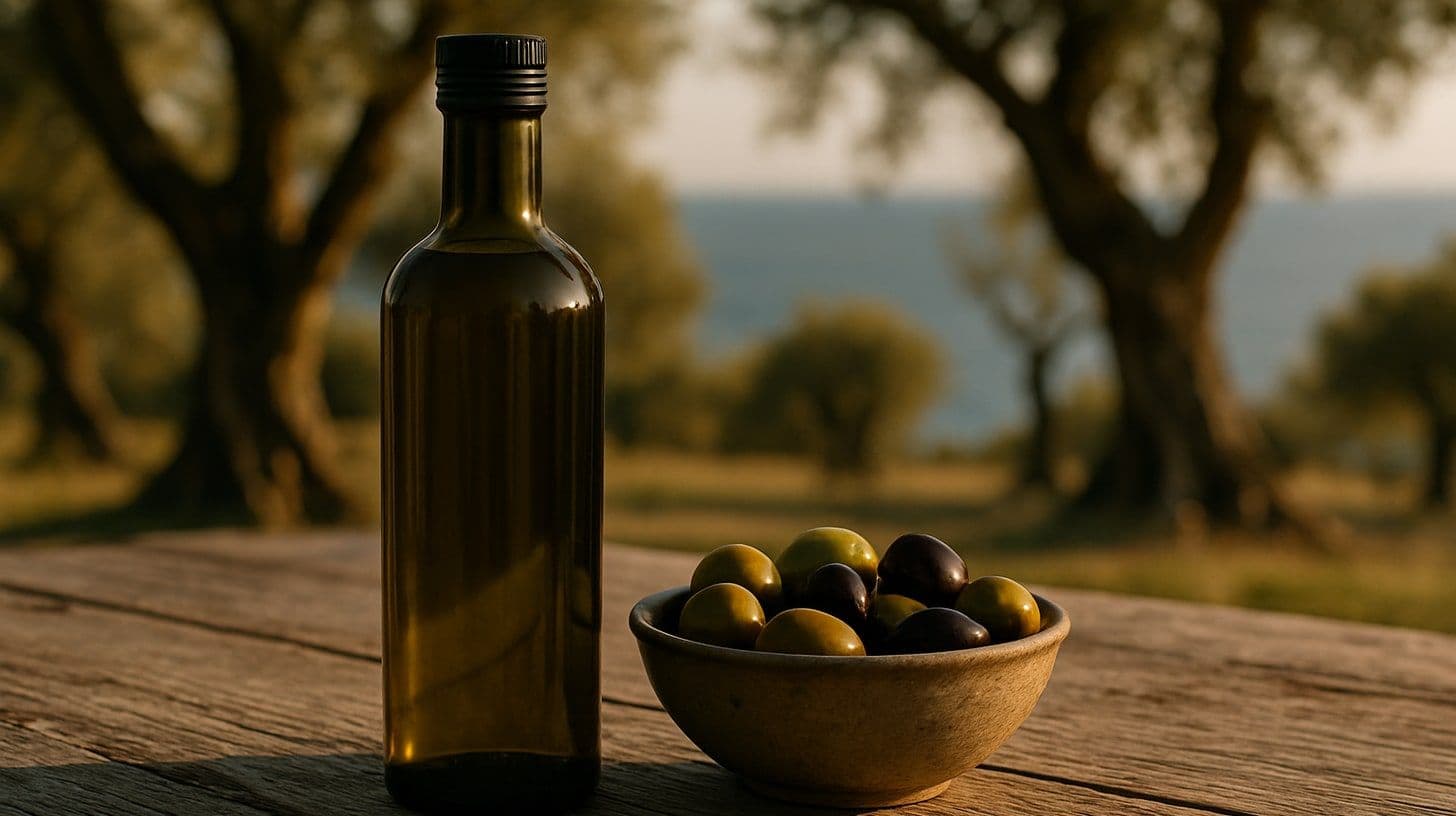
Olive oil in Montenegro may be placed on the market only after the producer is entered in the olive grower register or the producer register and holds a Ministry of Agriculture permit, issued on the basis of a quality assessment by an authorised laboratory. Oil is sold only in original packaging, and extra virgin and virgin oil only in glass bottles or metal containers, with a label. Extra virgin oil has at most 0.8 grams of free fatty acids per 100 grams, and virgin oil at most 2 grams. The 2025 amendments also introduced an olive tree register: the owner registers every tree with the municipality and the tree receives a unique number. An individual selling contrary to the law faces a fine of 30 to 2,000 euros.
This guide brings together the rules for producing and selling olive oil in one place.
Who registers in which register?
| Register | Who registers | Kept by |
| olive grower register | anyone growing olives on more than 700 m² or more than 50 trees who sells the fruit or produces oil | the Ministry |
| producer register | companies and sole traders producing and selling oil who have a mill entered in the Central Register of establishments | the Ministry |
| olive tree register | the owner of every olive tree; the tree receives a unique number displayed permanently | the municipal agriculture body |
- The olive grower application contains the applicant's details, a copy of the ID card, the number of trees, the area and varieties, and for someone else's land a title deed extract and certified consent no older than six months.
- Under the June 2026 rulebook the registers are kept electronically.
- Growers and producers keep records of the harvest, fruit purchased and oil produced and submit them to the Ministry by the end of March for the previous year.
How is the sales permit obtained?
- The producer requests a quality assessment from an authorised laboratory and bears its cost.
- The assessment covers laboratory analysis and, for virgin oil, sensory evaluation by a panel.
- Within 15 days the laboratory sends its report to the Ministry and the producer.
- Within 15 days of receiving the report the Ministry issues a decision allowing or banning sale.
- If an inspector requests the assessment, the Ministry bears the cost when the label matches the assessment, and the producer when it does not.
What are the olive oil categories?
| Category | Free fatty acids per 100 g |
| extra virgin | at most 0.8 g |
| virgin | at most 2 g |
| lampante | more than 2 g |
| refined | at most 0.3 g |
| blend of refined and virgin | at most 1 g |
- The new Rulebook on olive oil characteristics and quality of June 2026 sets the methods of analysis and sampling and replaced the 2019 rulebook.
What is prohibited?
- Repackaging the original packaging, relabelling, selling unlabelled packaging and using another producer's label.
- Mixing domestic oil with imported bulk oil and selling it as domestic; repackaging and blending are allowed only in establishments entered in the Central Register.
- Felling trees in an olive grove except sanitary felling with Ministry consent, transplanting old trees without municipal approval, and felling or transplanting olive trees older than 100 years.
How high are the fines?
| Who | Fine |
| individual | 30 to 2,000 euros |
| sole trader | 2,000 to 5,000 euros |
| company | 12,000 to 20,000 euros |
| responsible person in a company | 500 to 2,000 euros |
- For failing to submit records by 31 March the fine is 500 to 1,500 euros for an individual and 2,000 to 20,000 euros for a company.
How to register a farm is explained in the guide to the farm register, and where to sell in Podgorica in the guide to markets. Support for olive growing is in the guide to the agri-budget, and the rules for dairy products from the farm in the guide to homemade cheese and kajmak.
Frequently asked questions
Can I sell homemade olive oil without registration? No. Oil is placed on the market only after entry in the olive grower or producer register and a Ministry permit issued on the basis of a quality assessment.
Can olive oil be sold in plastic bottles? Extra virgin and virgin oil are sold only in glass bottles or metal containers, in original packaging.
How much acidity may extra virgin oil have? At most 0.8 grams of free fatty acids, expressed as oleic acid, per 100 grams of oil.
Do I have to register my olive trees? Under the 2025 amendments the owner registers every tree in the olive register with the municipal agriculture body, and the tree receives a unique number.
From how many trees must a grower register? If they grow olives on more than 700 m² or have more than 50 trees and sell the fruit.
May I cut down an old olive tree? Felling and transplanting olive trees older than 100 years is prohibited, whether or not they are in an olive grove.
Sources
The rules are set by the Law on Olive Growing and Olive Oil (Official Gazette 45/2014), as amended by 39/2016 and 92/2025. The registers are governed by the Rulebook on olive grower and producer registers (90/2026), and analysis methods by the Rulebook on olive oil characteristics and quality (87/2026). Information checked on 29 September 2026. Fijaka is a classifieds platform; this text is not legal advice.