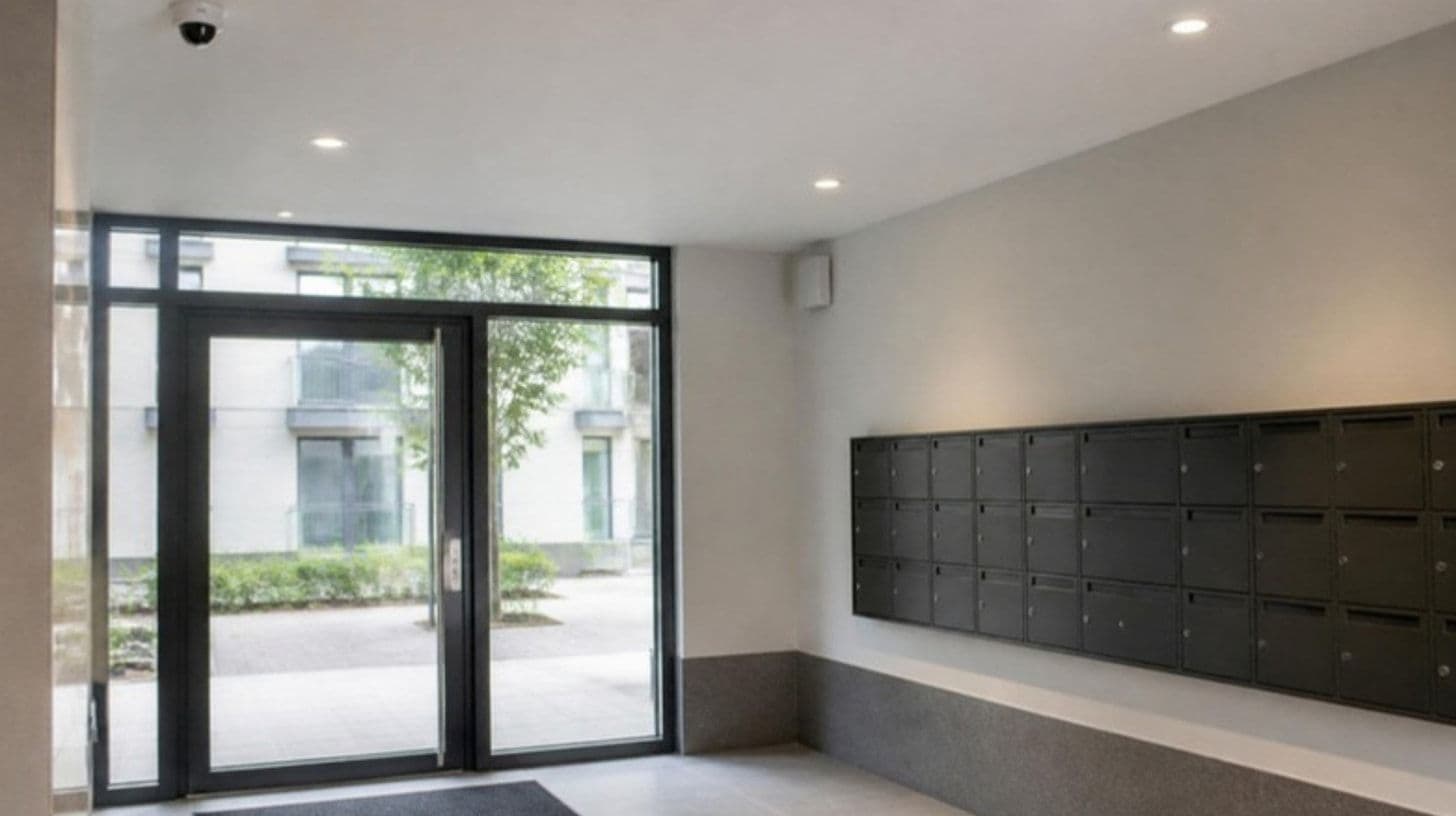
In an apartment building CCTV may record only building entrances and exits and common areas, and installing it requires the written consent of the owners' assembly members holding more than 70% of the ownership of the building, block or entrance. Flat entrances may not be filmed. Businesses and sole traders must put up a notice in a visible place before recording starts, and CCTV records are kept for no more than six months. Recording a public area requires the prior consent of the Personal Data Protection Agency. The fine for a legal entity ranges from 500 to 20,000 euros. These rules from the old Personal Data Protection Law stay in force even after the new law 133/2026 starts to apply, until a separate law on video surveillance is adopted.
This guide explains the rules for apartment buildings, business premises and public areas, retention periods, fines and what the new law brings.
What may a camera record in an apartment building?
| Rule | What the law says |
| What may be recorded | building entrances and exits and common areas |
| Who decides | the owners' assembly, in writing |
| Required majority | owners holding more than 70% of the building, block or entrance |
| What is forbidden | recording flat entrances |
- Consent is counted by share of ownership, not by the number of residents.
- The 70% majority is counted at the level of the building, block or entrance.
- The law forbids recording flat entrances without exception and sets a fine for that offence.
What must a business, institution or sole trader do?
- A camera may record access to official or business premises for the safety of people and property, to control entry and exit, or where the nature of the work poses a risk to employees.
- A written decision with reasons is adopted before introducing surveillance, and employees must be informed in writing before recording starts.
- Recording is not allowed outside the workplace, especially in changing rooms, lifts and toilets.
- A camera may not show the interior of residential buildings that is not connected to the entrance of the business premises, or flat entrances.
- The notice in a visible place must state who carries out the surveillance and a phone number where you can find out where and for how long recordings are kept.
- The system must be protected from unauthorised access, and recordings may not be transmitted over the internet, cable television or other communication channels.
What applies to cameras recording a public area?
- Introducing CCTV in a public area requires the prior consent of the Agency for Personal Data Protection and Free Access to Information.
- If a public area is recorded without a notice or without the Agency's consent, the Agency orders the cameras to be removed.
- The cameras are removed by whoever manages the public area or the building on which they are installed.
- The rules for business premises and for keeping records apply accordingly to CCTV in public areas.
How long are records kept and what are the fines?
| Rule | Amount or period |
| Retention of CCTV records | no more than six months |
| Fine for a legal entity | 500 to 20,000 euros |
| Fine for a sole trader | 150 to 6,000 euros |
| Fine for an individual and a responsible person | 150 to 2,000 euros |
- The records may include the image of a person, the date and time of recording, the name, the address and the reason for entry.
- Fines apply, among other things, to recording flat entrances, missing notices and unprotected systems.
What does the new Personal Data Protection Law change?
- The new law was published in Official Gazette 133/2026 on 11 September 2026, enters into force on the eighth day and will apply six months after entering into force.
- When it starts to apply, the old law ceases to be valid, except for Articles 35 to 40a on video surveillance.
- Those articles cease to be valid only when a separate law on video surveillance enters into force.
Rights and duties between neighbours are explained in our guide to neighbour rights, and noise rules in our guide to noise. Home insurance is covered in our guide to home insurance, and classified ad fraud in our guide to online ad scams. Camera kit and installation prices are explained by Glatko, and what the new data protection law changes is explained by RoNa Legal.
Frequently asked questions
Do all residents have to agree to cameras in a building? No, the written consent of the owners' assembly members holding more than 70% of the ownership of the building, block or entrance is needed.
What may a camera in a building record? Only building entrances and exits and common areas, and flat entrances may not be recorded.
How long are CCTV records kept? No more than six months, since the 2017 amendment.
Can I install a camera that records the street? CCTV in a public area needs the Agency's prior consent, and without it the Agency may order the camera to be removed.
What is the fine for unlawful CCTV? 500 to 20,000 euros for a legal entity, 150 to 6,000 euros for a sole trader and 150 to 2,000 euros for an individual.
Does the new law 133/2026 change the camera rules? Not for now, as Articles 35 to 40a of the old law stay in force until a separate law on video surveillance is adopted.
Sources
The rules are set by the Personal Data Protection Law (Official Gazette 79/08, Articles 35 to 40), with the 2012 amendments (44/12, fines in Article 74) and the 2017 amendments (22/17, the six-month period, consent for public areas and Article 40a). The start of application of the new law and the continued validity of the video surveillance provisions are set by the Personal Data Protection Law 133/2026 (Articles 105 and 106). The information was checked on 26 September 2026. Fijaka is a classifieds platform; this article is not legal advice.