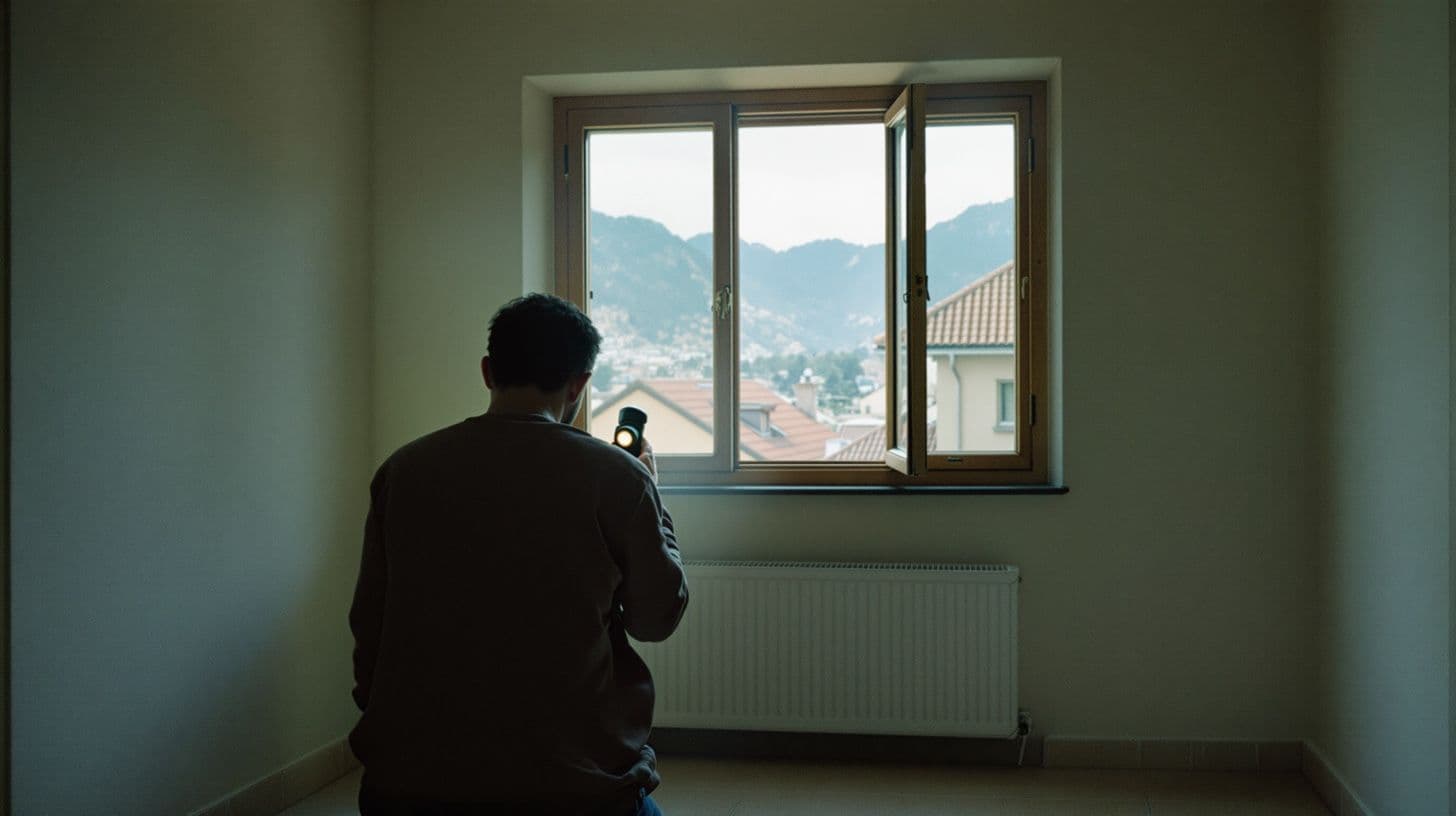
What should you check when viewing a flat in Montenegro? Start with the year the building was finished, the heating, damp and the installations. Only 14.2% of occupied homes have central heating and about half are heated mainly with wood; 62.4% have air conditioning. 37.5% of homes were built before 1981, when Yugoslavia adopted its seismic building code after the 1979 earthquake.
The figures come from the 2023 census of population, households and dwellings, published by MONSTAT in 2025, and cover the 285,734 dwellings used for permanent living. A viewing cannot replace a legal check of the title or a survey by an engineer, but it shows you what to ask and what to test before you make an offer.
How old are Montenegro's homes?
| Year of construction | Dwellings | Share |
| Up to 1945 | 12,583 | 4.4% |
| 1946 to 1960 | 19,912 | 7.0% |
| 1961 to 1980 | 74,728 | 26.2% |
| 1981 to 2000 | 76,593 | 26.8% |
| 2001 to 2011 | 45,232 | 15.8% |
| 2012 to 2023 | 47,759 | 16.7% |
| Unknown | 8,885 | 3.1% |
For buildings that were damaged and later rebuilt, the census records the year of reconstruction. The walls of 62.8% of homes are built of blocks, 17.1% of brick and 8.7% of stone.
Why does 1981 matter?
On 15 April 1979 an earthquake of magnitude 7.0 struck off the coast between Bar and Ulcinj. It killed 101 people in Montenegro and 35 in Albania, left more than 80,000 people homeless and damaged Ulcinj, Bar, Petrovac, Budva, Tivat, Kotor, Risan and Herceg Novi. In 1981 Yugoslavia adopted a rulebook on building in seismic areas, with technical standards for zones of intensity VII to IX. Buildings designed before it were not built to those standards.
For a flat in an older building, ask when the building was finished, whether it was repaired or strengthened after 1979, and whether storeys were added later. Cracks running diagonally from the corners of doors and windows, or through load-bearing walls and balcony slabs, are a reason to bring in a structural engineer before you commit.
What should you check on the viewing?
| Area | What to look at and ask |
| Damp and mould | Corners of outside walls, behind wardrobes, around windows, bathroom ceilings and the ground floor; fresh paint on a single patch; a musty smell |
| Heating | What heats the flat: air conditioning, electric radiators, a wood or pellet stove, central heating; the age of the units and last winter's bills |
| Cooling | How many rooms have air conditioning and how old the units are |
| Electrics | The connected power of the meter, whether it can run air conditioning and a water heater at once, and when the wiring was last renewed |
| Water | Pressure on the upper floors, the age and size of the water heater, and whether supply drops in summer on the coast |
| Windows | Frame material, double glazing and whether the windows close tight |
| Building | Roof, facade, stairwell and lift, the monthly maintenance charge and any major works planned |
| Noise and light | Traffic, bars, the orientation of the rooms; visit once in the evening |
| Parking and storage | Whether a parking space or storage room is part of the flat or a separate unit |
Heating is where Montenegrin flats differ most from what many buyers expect. Of homes that are lived in, 49.8% are heated mainly with firewood, 43.7% with electricity and 5.3% with pellets or briquettes. In a flat without central heating, ask to see the winter electricity bills, which shows you how warm it can be kept. How the electricity connection and supply work is explained in our guides to getting electricity connected and to power outages.
Which documents should you ask for?
| Document | Why |
| Title extract (list nepokretnosti) | Owner, area, floor and any mortgages or restrictions must match the flat you saw |
| Use permit or legalisation status | A flat built or extended without a permit is harder to sell and to mortgage |
| Energy performance certificate | Shows the energy class; our guide explains when a sale or rental requires it |
| Maintenance charge and building rules | What you will pay every month and what the owners' assembly has decided |
How to read the title extract and check debts is explained in our guide to the title and debt check, what a listing that says legalisation is in progress means in our article on legalizacija, and the energy classes in our guide to the energy performance certificate.
What if you find a problem later?
If a defect you could not see on the viewing appears after the purchase, you must notify the seller within 8 days of discovering it. The seller is liable for hidden defects that appear within 6 months of handover, and for longer if the contract says so or the seller knew about the defect. The rules are in our guide to hidden defects.
Before you make an offer, it helps to know what putting right the problems you saw would cost. Glatko's step-by-step guide to renovating a flat in Montenegro lists typical works and their prices. Flats for sale are listed in our real estate category.
Frequently asked questions
What should I check when buying a flat in Montenegro? The year of construction and any later extensions, damp, how the flat is heated and cooled, the electrics and water, the building's condition, and the title extract, use permit and energy certificate.
Do flats in Montenegro have central heating? Most do not: according to the 2023 census only 14.2% of homes that are lived in have central heating. About half are heated mainly with wood and 43.7% with electricity.
Is Montenegro earthquake-prone? Yes. The 1979 earthquake of magnitude 7.0 hit the coast hardest, and Yugoslavia adopted its seismic building rules in 1981. Ask how old the building is and whether it was strengthened.
How old are most homes in Montenegro? 53% were built between 1961 and 2000, and 32.5% after 2001, according to the 2023 census.
How many Montenegrin homes have air conditioning? 62.4% of homes used for permanent living, according to the 2023 census.
What if I find damp after buying? If it is a hidden defect, notify the seller within 8 days of discovering it; the seller is liable for hidden defects that appear within 6 months of handover.
Sources
Housing figures come from MONSTAT's 2023 census releases on dwellings by installations and heating (release 52/2025) and on dwellings by floor, year of construction and material (release 55/2025). The 1979 earthquake is described by the Institute of Hydrometeorology and Seismology of Montenegro, and the 1981 rulebook is the Rulebook on technical standards for building in seismic areas (Official Gazette of the SFRY 31/1981). The seller's liability for defects is set by the Law on Obligations. The data were checked on 25 September 2026. Fijaka is a classifieds platform and does not give technical or legal advice; for an older building, ask a structural engineer.